BreakThruKey

Showing posts with label picture of the day. Show all posts

Thursday, March 16, 2017

Daily Maverick - PICTURE OF THE DAY

Daily Maverick
FIRST THING with JOHN STUPART
Thursday, 16 March 2017


BY EPA/KIMIMASA MAYAMA
Cuba's starter Lazaro Blanco throws a pitch against Netherlands' third baseman Xander Bogaerts in the first inning of the second round game of the World Baseball Classic at Tokyo Dome in Tokyo, Japan, 15 March 2017. 

Astronomy Picture of the Day

Astronomy Picture of the Day

Discover the cosmos! 
With a brief explanation written by a professional astronomer.
2017 March 15 
See Explanation.  Clicking on the picture will download the highest resolution version available.
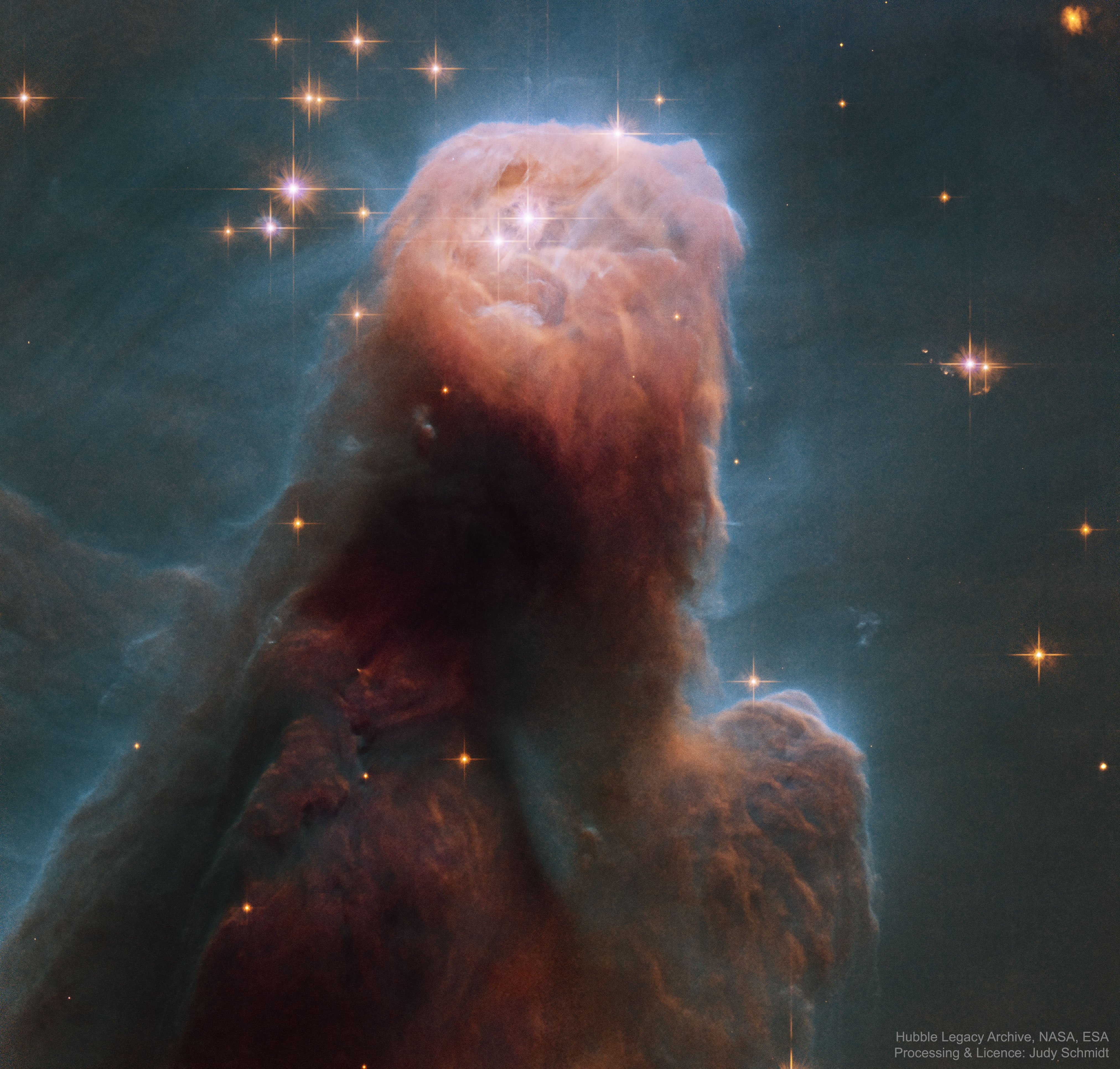
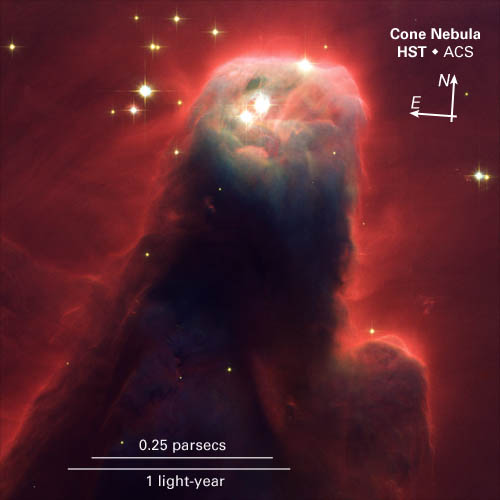
The Cone Nebula from Hubble 
 Image Credit: Hubble Legacy Archive, NASA, ESA - Processing & Licence: Judy Schmidt


Explanation: Stars are forming in the gigantic dust pillar called the Cone Nebula. Cones, pillars, and majestic flowing shapes abound in stellar nurseries where natal clouds of gas and dust are buffeted by energetic winds from newborn stars. The Cone Nebula, a well-known example, lies within the bright galactic star-forming region NGC 2264. The Cone was captured in unprecedented detail in this close-up composite of several observations from the Earth-orbiting Hubble Space Telescope. While the Cone Nebula, about 2,500 light-years away in Monoceros, is around 7 light-years long, the region pictured here surrounding the cone's blunted head is a mere 2.5 light-years across. In our neck of the galaxy that distance is just over half way from our Sun to its nearest stellar neighbors in the Alpha Centauri star system. The massive star NGC 2264 IRS, seen by Hubble's infrared camera in 1997, is the likely source of the wind sculpting the Cone Nebula and lies off the top of the image. The Cone Nebula's reddish veil is produced by glowing hydrogen gas.

Wednesday, March 1, 2017

Astronomy Picture of the Day

Astronomy Picture of the Day

Discover the cosmos!
With a brief explanation written by a professional astronomer.
2017 March 1 
See Explanation.  Clicking on the picture will download the highest resolution version available.
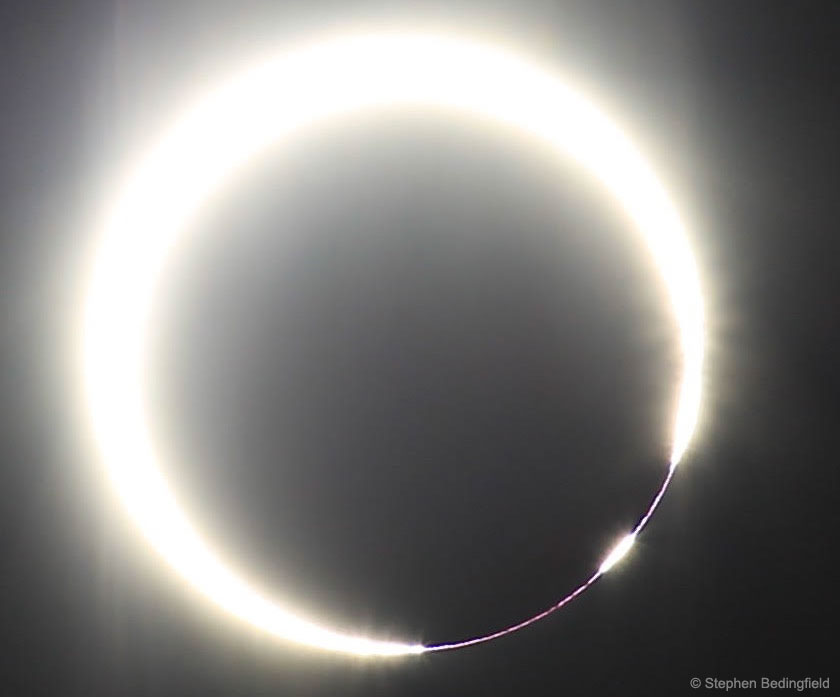
A Solar Eclipse with a Beaded Ring of Fire 
 Image Credit & Copyright: Stephen Bedingfield


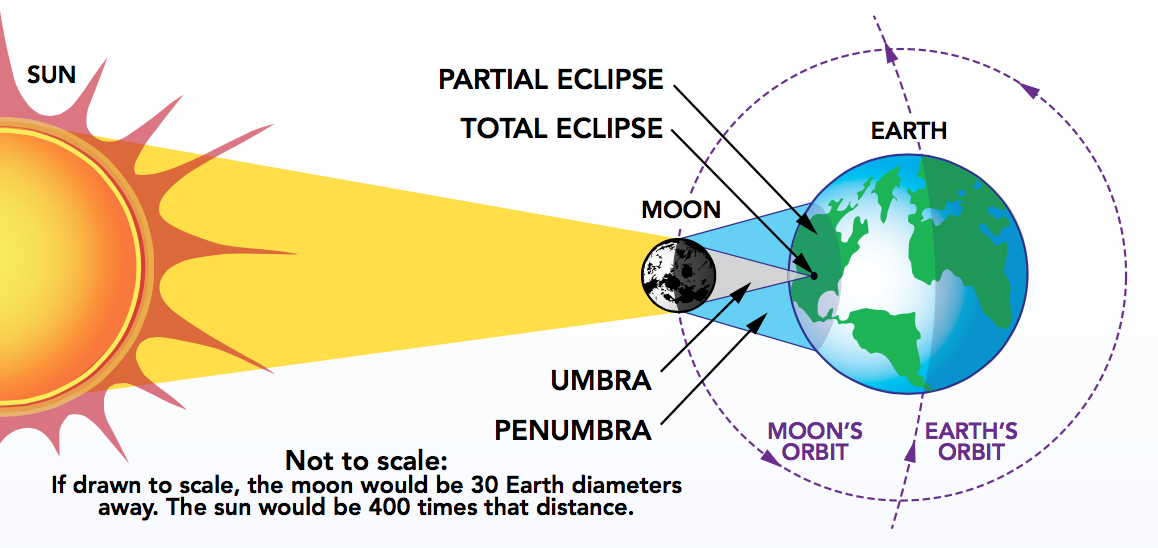
Explanation: What kind of eclipse is this? On Sunday, visible in parts of Earth's southern hemisphere, the Moon blocked part of the Sun during a partial solar eclipse. In some locations, though, the effect was a rare type of partial eclipse called an annular eclipse. There, since the Moon is too far from the Earth to block the entire Sun, sunlight streamed around the edges of the Moon creating a "ring of fire". At some times, though, the effect was a rare type of annular eclipse. Then, an edge of the Moon nearly aligned with an edge of the Sun, allowing sunlight to stream through only low areas on the Moon. Called a "Baily's bead" or a "diamond ring", this doubly rare effect was captured Sunday in the feature photograph from Chubut, Argentina, in South America. This summer a total solar eclipse will swoop acrossNorth America.

Tuesday, February 28, 2017

PICTURE OF THE DAY

Daily Maverick
FIRST THING with JOHN STUPART
Tuesday, 28th February 2017


BY EPA/RONALD WITTEK
A float referring to US President Donald Trump during the Rose Monday carnival parade in Mainz, Germany, 27 February 2017. Rose Monday is the traditional highlight of the carnival season in many German cities. 
A float referring to US President Donald Trump during the Rose Monday carnival parade in Mainz, Germany, 27 February 2017. Rose Monday is the traditional highlight of the carnival season in many German cities
 

Astronomy Picture of the Day

Astronomy Picture of the Day

Discover the cosmos! 
With a brief explanation written by a professional astronomer.
2017 February 28 
See Explanation.  Clicking on the picture will download the highest resolution version available.
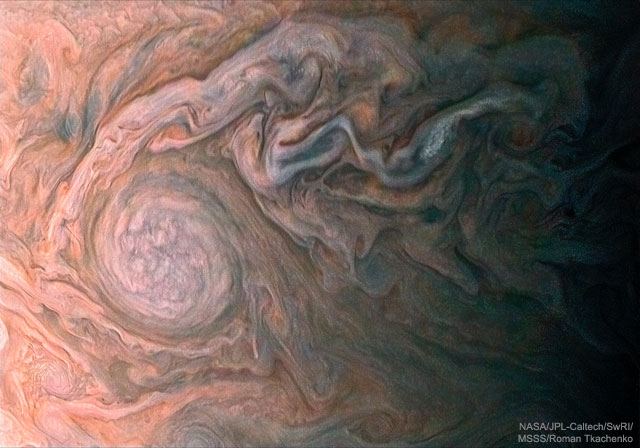
A White Oval Cloud on Jupiter from Juno 
 Image Credit: NASA, JPL-Caltech, SwRI, MSSS; Processing: Roman Tkachenko


Explanation: This storm cloud on Jupiter is almost as large as the Earth. Known as a white oval, the swirling cloud is a high pressure system equivalent to an Earthly anticyclone. The cloud is one of a "string of pearls" ovals south of Jupiter's famous Great Red Spot. Possibly, the Great Red Spot is just a really large white oval than turned red. Surrounding clouds show interesting turbulence as they flow around andpast the oval. The featured image was captured on February 2 as NASA's robotic spacecraft Juno made a new pass just above the cloud tops of the Jovian world. Over the next few years, Juno will continue to orbit and probe Jupiter, determine atmospheric water abundance, and attempt to determine if Jupiter has a solid surface beneath its thick clouds.

Monday, February 27, 2017

Astronomy Picture of the Day

Astronomy Picture of the Day

Discover the cosmos!
With a brief explanation written by a professional astronomer.
2017 February 27 
See Explanation.  Clicking on the picture will download the highest resolution version available.
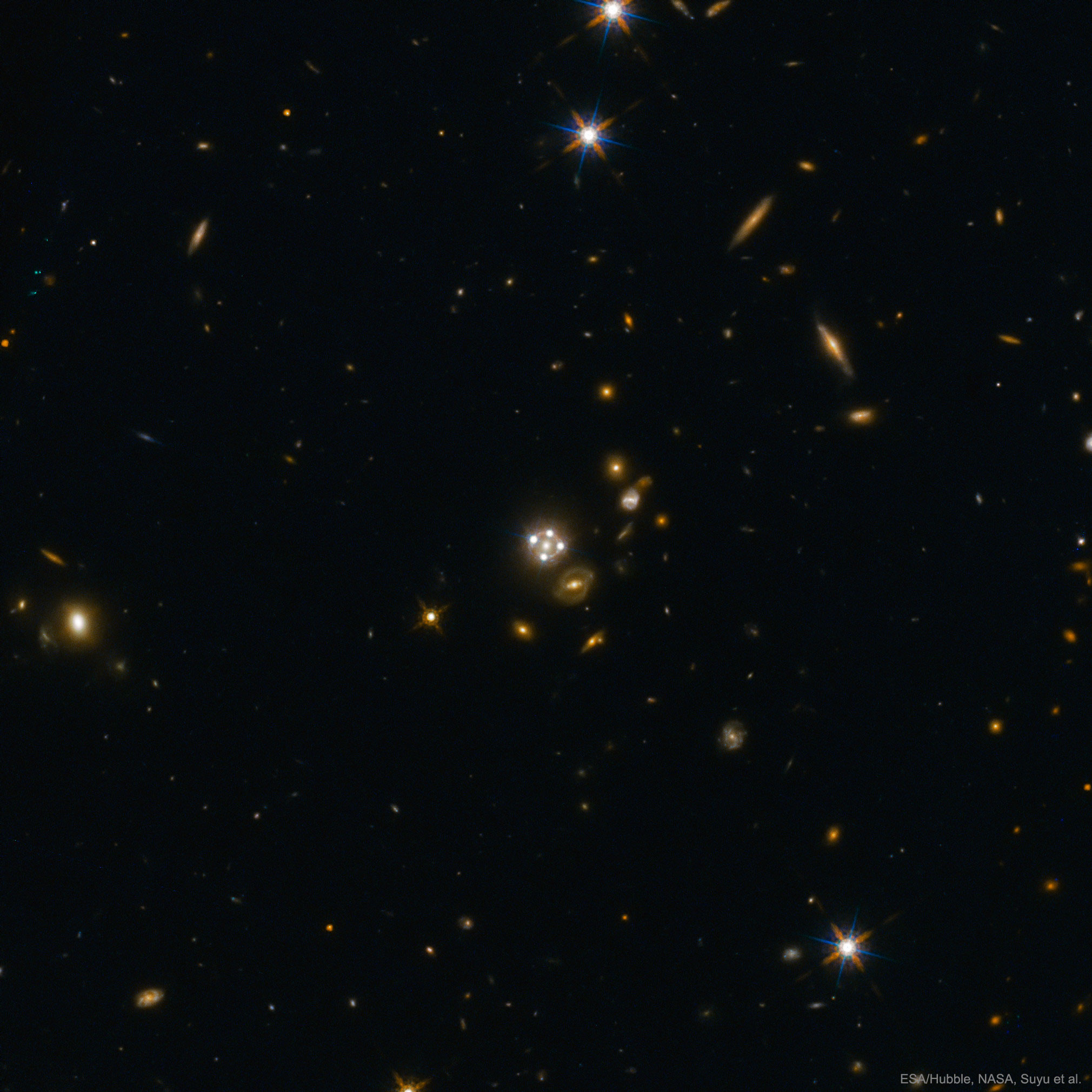
Four Quasar Images Surround a Galaxy Lens 
 Image Credit: ESA/Hubble, NASA, Sherry Suyu et al.
Explanation: An odd thing about the group of lights near the center is that four of them are the same distant quasar. This is because the foreground galaxy -- in the center of the quasar images and the featured image -- is acting like a choppy gravitational lens. A perhaps even odder thing is that by watching these background quasars flicker, you can estimate the expansion rate of the universe. That is because the flicker timing increases as the expansion rate increases. But to some astronomers, the oddest thing of all is that these multiply imaged quasars indicate a universe that is expanding a bit faster than has been estimated by different methods that apply to the early universe. And that is because ... well, no one is sure why. Reasons might include an unexpected distribution of dark matter, some unexpected effect ofgravity, or something completely different. Perhaps future observations and analyses of this and similarly lensed quasar images will remove these oddities.

PICTURE OF THE DAY


Daily Maverick
FIRST THING with JOHN STUPART
Monday, 27th February 2017


BY EPA/PAUL BUCK
Viola Davis, winner of the award for Actress in a Supporting Role for 'Fences', poses in the press room during the 89th annual Academy Awards ceremony at the Dolby Theatre in Hollywood, California, US, 26 February 2017. The Oscars are presented for outstanding individual or collective efforts in 24 categories in film-making.

Friday, February 24, 2017

Astronomy Picture of the Day

Astronomy Picture of the Day

Discover the cosmos! 
With a brief explanation written by a professional astronomer.
2017 February 24 
See Explanation.  Clicking on the picture will download
 the highest resolution version available.
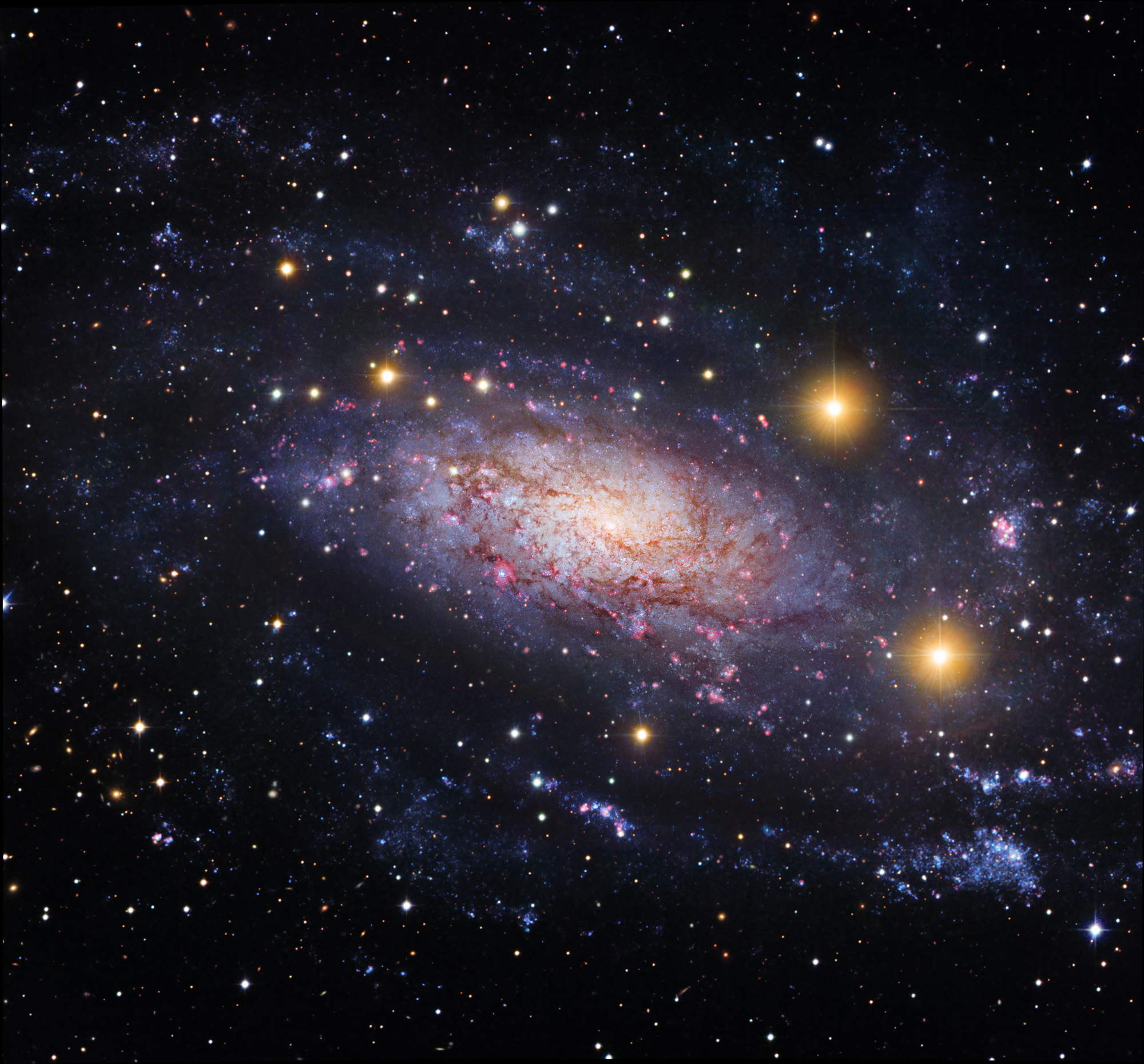
NGC 3621: Far Beyond the Local Group 
Image Credit & Copyright: Processing - Robert Gendler, Roberto Colombari
Data - Hubble Legacy Archive, European Southern Observatory, et al.


Explanation: Far beyond the local group of galaxies lies NGC 3621, some 22 million light-years away. Found in the multi-headed southern constellation Hydra, the winding spiral arms of this gorgeous island universe are loaded with luminous blue star clusters, pinkish starforming regions, and dark dust lanes. Still, for astronomers NGC 3621 has not been just another pretty face-on spiral galaxy. Some of its brighter stars have been used as standard candles to establish important estimates of extragalactic distances and the scale of the Universe. This beautiful image of NGC 3621, is a composite of space- and ground-based telescope data. It traces the loose spiral arms far from the galaxy's brighter central regions for some 100,000 light-years. Spiky foreground stars in our own Milky Way Galaxy and even more distant background galaxies are scattered across the colorful skyscape.


Daily Maverick
FIRST THING with JOHN STUPART
TGIF, 24th February 2017


BY EPA/WILL OLIVER
Members of the Mercedes-AMG Petronas team prepare the Mercedes W08 Formula One car after British driver Lewis Hamilton, centre, tested the car ahead of a photocall to launch the new Mercedes car and team at Silverstone, Northamptonshire, Britain, 23 February 2017.


 Members of the Mercedes-AMG Petronas team prepare the Mercedes W08 Formula One car after British driver Lewis Hamilton, centre, tested the car ahead of a photocall to launch the new Mercedes car and team at Silverstone, Northamptonshire, Britain, 23 February 2017.

Eyewitness picture of the day

Eyewitness picture of the dayMore »
An aerial view of containers in Shenzhen port
Shutterstock
The Guardian

Wednesday, February 22, 2017

Astronomy Picture of the Day

Astronomy Picture of the Day

Discover the cosmos! Each day a different image or photograph of our fascinating universe is featured, along with a brief explanation written by a professional astronomer.
2017 February 22
See Explanation.  Clicking on the picture will download the highest resolution version available.
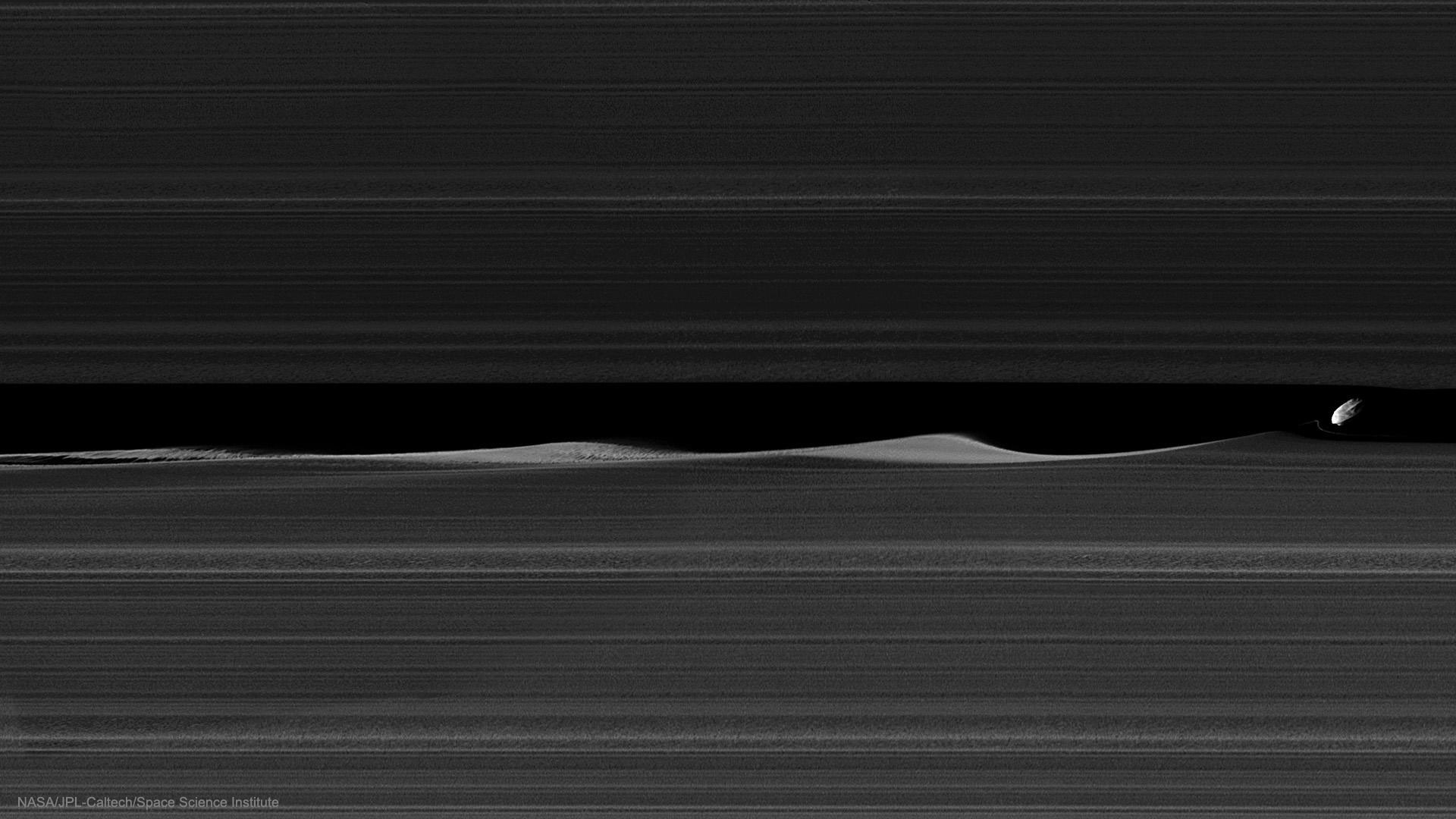
Daphnis and the Rings of Saturn 
 Image Credit: NASA, JPL-Caltech, Space Science Institute, Cassini
Explanation: What's happening to the rings of Saturn? Nothing much, just a little moon making waves. The moon is 8-kilometer Daphnis and it is making waves in the Keeler Gap of Saturn's rings using just its gravity -- as it bobs up and down, in and out. The featured image is a wide-field version of a previously released image taken last month by the robotic Cassini spacecraft during one of its new Grand Finaleorbits. Daphnis can be seen on the far right, sporting ridges likely accumulated from ring particles. Daphnis was discovered in Cassini images in 2005 and raised mounds of ring particles so high in 2009 -- during Saturn's equinox when the ring plane pointed directly at the Sun -- that they cast notable shadows.

Eyewitness picture of the day

Eyewitness picture of the dayMore »
A flock of sheep joins the annual migration to islands on the frozen Lake Puma Yumco
Xinhua News Agency / Eyevine
The Guardian

Daily Maverick - PICTURE OF THE DAY


Daily Maverick
FIRST THING with JOHN STUPART
Wednesday, 22nd February 2017


BY EPA/KIM LUDBROOK
Special forces soldiers travel on a Gecko all-terrain vehicle during a display as part of the annual National Defence Force Parade held in Durban, South Africa, 21 February 2017. The parade and display of the defence force's capability was held in the coastal city. 
Special forces soldiers travel on a Gecko all-terrain vehicle during a display as part of the annual National Defence Force Parade held in Durban, South Africa, 21 February 2017. The parade and display of the defence force's capability was held in the coastal city.

Tuesday, February 21, 2017

Astronomy Picture of the Day

Astronomy Picture of the Day

Discover the cosmos!
With a brief explanation written by a professional astronomer.
2017 February 21 
An Active Night over the Magellan Telescopes 
 Image Credit & Copyright: Yuri Beletsky (Carnegie Las Campanas Observatory, TWAN);
Music Credit & License: Airglow by Club 220
Explanation: The night sky is always changing. Featured here are changes that occurred over a six hour period in late 2014 June behind the dual 6.5-meter Magellan Telescopes at Las Campanas Observatoryin Chile. The initial red glow on the horizon is airglow, a slight cooling of high air by the emission of specific colors of light. Bands of airglow are also visible throughout the time-lapse video. Early in the night, car headlights flash on the far left. Satellites quickly shoot past as they circle the Earth and reflect sunlight. A long and thin cloud passes slowly overhead. The Large Magellanic Cloud rises on the left, while the expansive central band of our Milky Way Galaxy arches and pivots as the Earth rotates. As the night progresses, the Magellan telescopes swivel and stare as they explore pre-determined patches of the night sky. Every night, every sky changes differently, even though the phenomena at play are usually the same.

PICTURE OF THE DAY


Daily Maverick
FIRST THING with JOHN STUPART
Tuesday, 21st February 2017


BY EPA/SARIEH ABU ZAID
An injured woman holds an injured child at a hospital, after alleged airstrikes by forces loyal to the Syrian government hit areas inhabited by civilians in Barzeh, near Damascus, 20 February 2017. According to local witnesses, the airstrikes on the neighbourhoods of Barzeh, al-Qabun, and Tishreen near Damascus had started three days earlier and resulted in the deaths of at least seven people and injuries to some 33 others.

Eyewitness picture of the day

Eyewitness picture of the dayMore »
Refugees and migrants set sail for Italy on the Golfo Azzurro rescue vessel after being taken aboard off the Libyan coast. The boat is operated by Proactiva Open Arms, a Spanish charity
Getty Images
The Guardian

Monday, February 20, 2017

PICTURE OF THE DAY

Daily Maverick
FIRST THING with JOHN STUPART
Monday, 20th February 2017
PICTURE OF THE DAY
BY EPA/ALESSANDRO DELLA VALLE
Swiss musher Ueli Gerber leads his six Samoyed dogs during the international dog sled races in the Bernese Oberland, Kandersteg, Switzerland, 18 February 2017. 
Swiss musher Ueli Gerber leads his six Samoyed dogs during the international dog sled races in the Bernese Oberland, Kandersteg, Switzerland, 18 February 2017.

Astronomy Picture of the Day

Astronomy Picture of the Day

Discover the cosmos! 
With a brief explanation written by a professional astronomer.
2017 February 20 
See Explanation.  Clicking on the picture will download the highest resolution version available.
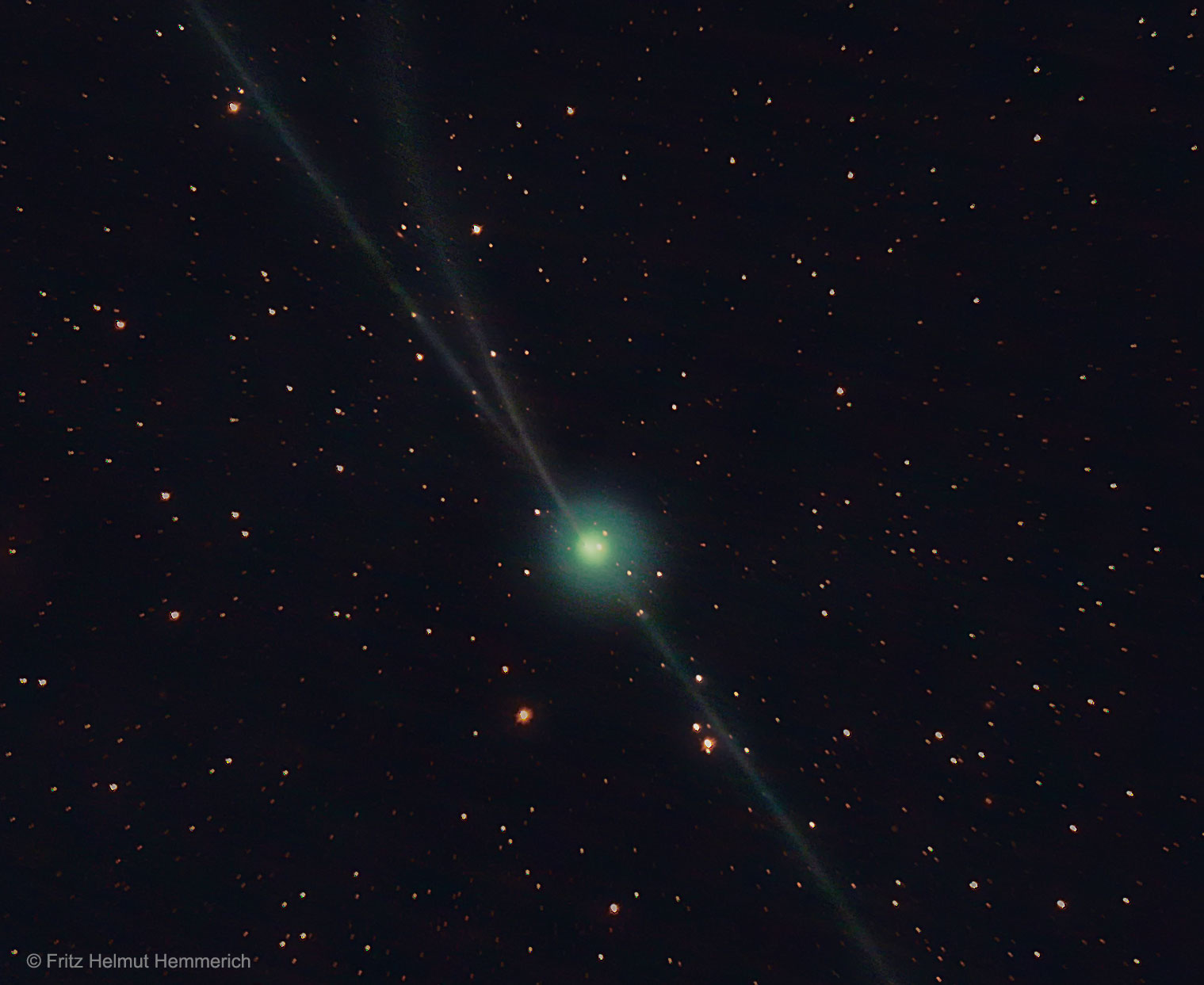
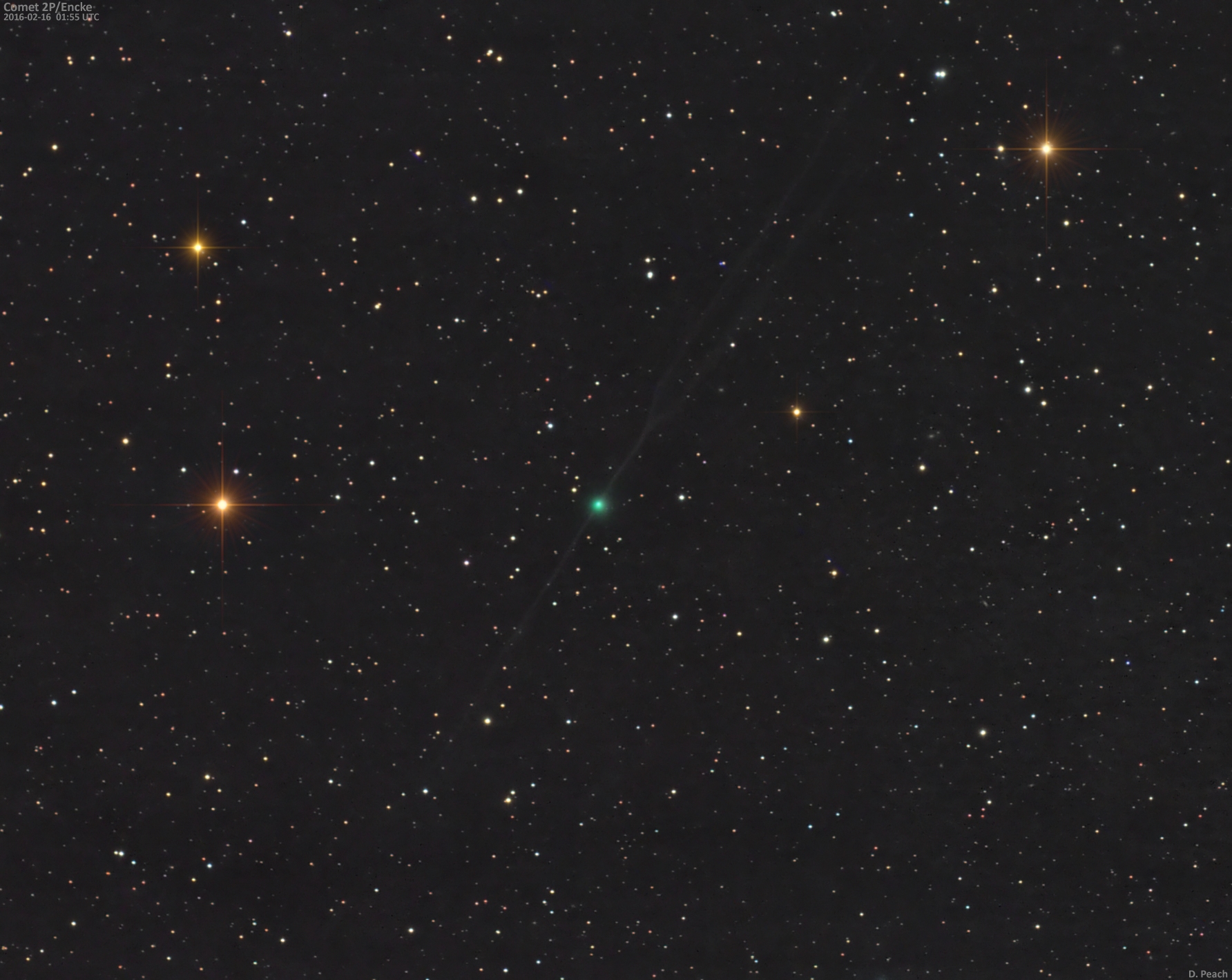
Almost Three Tails for Comet Encke 
 Image Credit & Copyright: Fritz Helmut Hemmerich
Explanation: How can a comet have three tails? Normally, a comet has two tails: an ion tail of charged particles emitted by the comet and pushed out by the wind from the Sun, and a dust tail of small debris that orbits behind the comet but is also pushed out, to some degree, by the solar wind. Frequently a comet will appear to have only one tail because the other tail is not easily visible from the Earth. In thefeatured unusual image, Comet 2P/Encke appears to have three tails because the ion tail split just near to the time when the image was taken. The complex solar wind is occasionally turbulent and sometimes creates unusual structure in an ion tail. On rare occasions even ion-tail disconnection events have been recorded. An image of the Comet Encke taken two days later gives a perhaps less perplexing perspective.

Eyewitness picture of the day

Eyewitness picture of the dayMore »
Models backstage ahead of the Fashion East runway show during the London Fashion Week at Tate Modern
Models backstage at the Fashion East runway show during London fashion week at Tate Modern
Getty Images
The Guardian

Tuesday, February 14, 2017

Astronomy Picture of the Day

Astronomy Picture of the Day

Discover the cosmos! 
With a brief explanation written by a professional astronomer.
2017 February 14 
See Explanation.  Clicking on the picture will download the highest resolution version available.
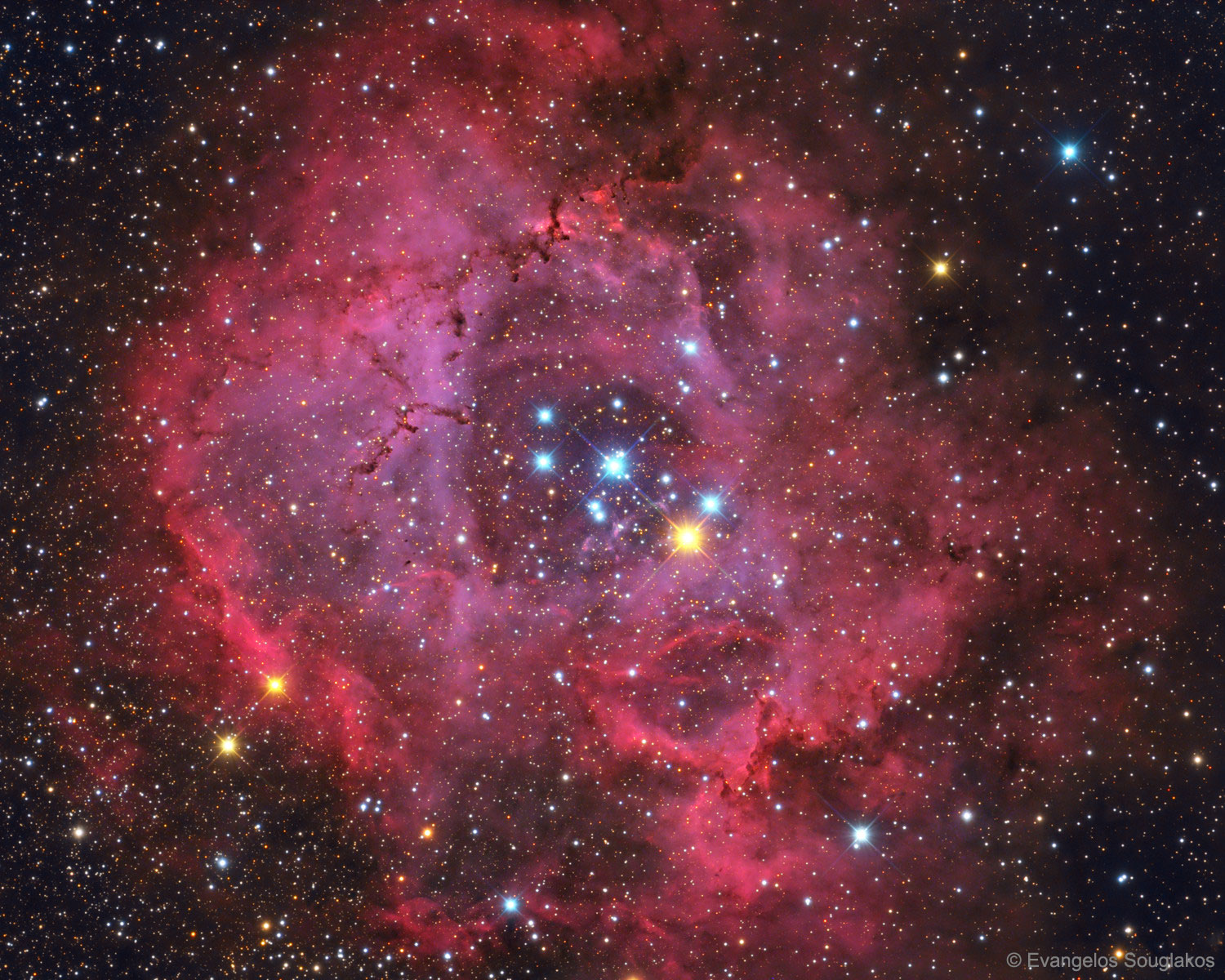
The Rosette Nebula 
 Image Credit & Copyright: Evangelos Souglakos
Explanation: Would the Rosette Nebula by any other name look as sweet? The bland New General Catalog designation of NGC 2237 doesn't appear to diminish the appearance of this flowery emission nebula. Inside the nebula lies an open cluster of bright young stars designated NGC 2244. These stars formed about four million years ago from the nebular material and their stellar winds are clearing a hole in the nebula's center, insulated by a layer of dust and hot gas. Ultraviolet light from the hot cluster stars causes the surrounding nebula to glow. The Rosette Nebula spans about 100 light-years across, liesabout 5000 light-years away, and can be seen with a small telescope towards the constellation of the Unicorn (Monoceros)